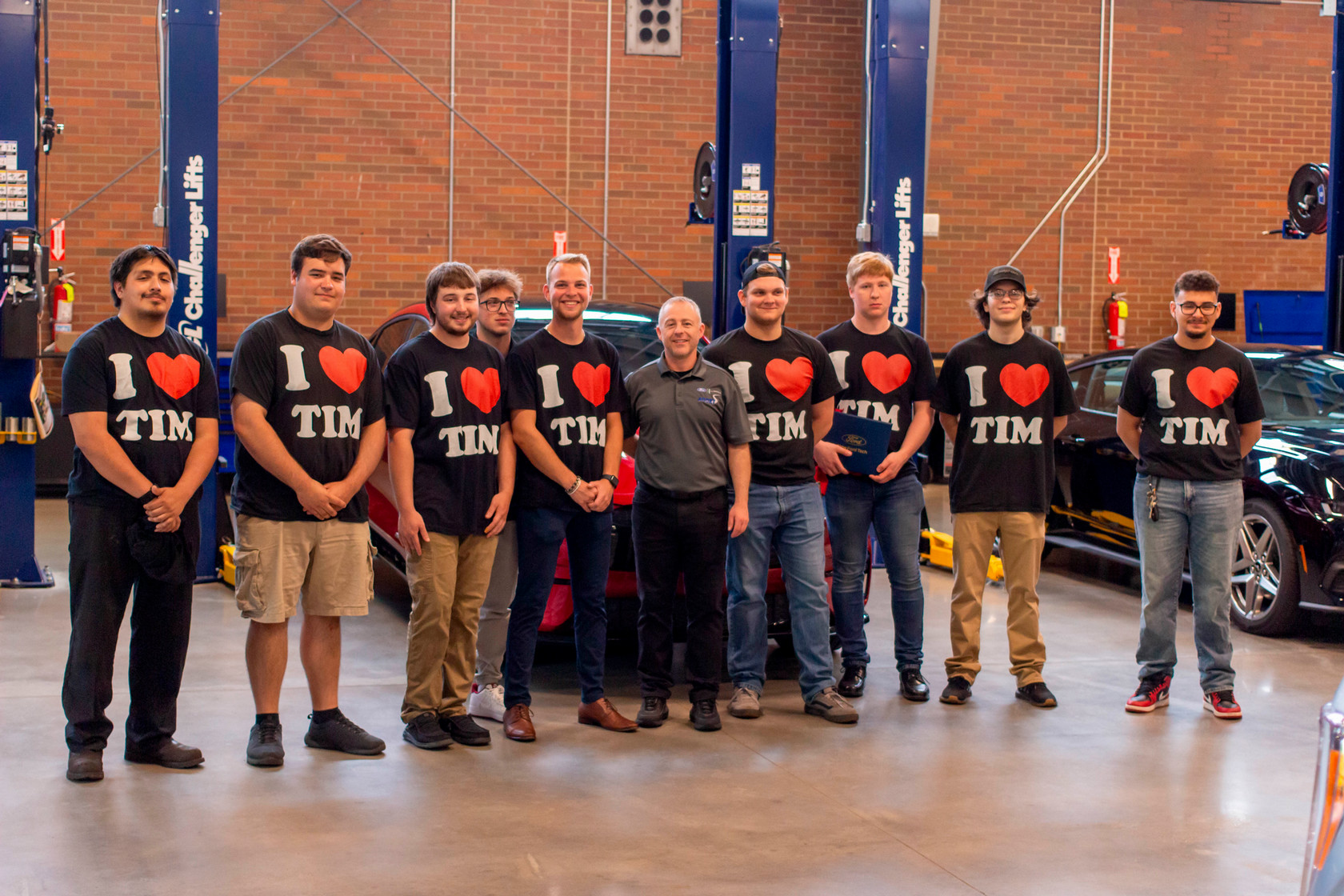
Whether you want to earn a degree, improve your skills, get certified, train for a new career, or explore a new hobby, you can choose from many programs and courses.
Explore your interests and find a program that puts you on the path to a bright future. Tri-C offers both credit and non-credit courses as well as certificate programs in most career fields.
More than 1,000 credit courses are offered each semester in more than 200 career and technical programs. Tri-C also grants short-term certificates, certificates of proficiency and post-degree professional certificates.
Tri-C's Workforce Training provides both non-credit and credit training for individuals and businesses to assist individuals with skills leading to employment. Tri-C's Corporate College provides professional development and corporate training opportunities.
Tri-C offers a variety of affordable and convenient community programs for both adults and youth. These programs are designed to promote individual development.
Which Automotive Technology Track Is Right for You?
Automotive Technology, Associate of Applied Science (S956) General Program (Auto Tech)
Choose the General Program if you want broad automotive training that applies to a variety of vehicle makes and models. Graduates pursue careers with dealerships, fleet service companies, independent repair shops, oil service centers, automotive parts businesses and other automotive-related employers.
This program offers the greatest flexibility. Students may attend full time or part time, with day and evening course options available. Courses are offered each semester. Because enrollment is limited to 16 students per section, early registration is recommended.
Field experience may be completed with a dealership, independent repair shop or other automotive-related employer. Students must secure employment and meet field experience eligibility requirements before submitting a field experience application. Students can explore current opportunities on the Employer Job Openings page.
Ford ASSET (S960) and GM ASEP (S957)
Choose Ford ASSET or GM ASEP if you are committed to a manufacturer-specific career with a Ford/Lincoln or GM dealership. These programs follow a structured cohort model that begins each fall.
Students must complete an application, interview and hiring process with a sponsoring dealership. Continued employment with that dealership is required throughout the 22-month program. Dealership employment requirements typically include a valid driver's license and may include drug testing and criminal background checks.
Field experience is typically completed through the sponsoring dealership and is strongly recommended before the fall cohort begins. Upon graduation, students earn an associate degree and manufacturer-specific credentials recognized throughout the industry.
Comparing General Program vs. Ford and GM programs
Features of General Program vs. Ford and GM Programs
General Program (S956)
Ford ASSET (S960) / GM ASEP (S957)
Best For
Students seeking broad training across many vehicle makes and models.
Students committed to a manufacturer-specific dealership career.
Vehicle Training
Manufacturer-neutral automotive training.
Manufacturer-specific training and corporate web-based coursework leading to brand credentials.
Ford ASSET: Ford/Lincoln GM ASEP: Chevrolet, Cadillac, Buick and GMC
Schedule
Day and evening classes available. Courses are offered in 4-, 8-, 12- and 16-week formats.
Daytime only. Cohort model alternating between 8 weeks of classroom instruction and 8 weeks of dealership employment. Fall start only.
Program Flexibility
High. Students follow an academic plan and register independently.
Structured cohort with a prescribed sequence of courses and work experiences.
Admission Requirements
Standard College enrollment process. No program acceptance or employment required.
Program application, interview with the Program Director and dealership employment required for acceptance.
Registration Process
Students register independently. Early registration is encouraged because classes are limited to 16 students.
Registration occurs during private cohort orientation. Students receive department approval and guaranteed seating in program courses.
Employment Requirement
Employment is required for field experience but not for admission.
Ongoing employment with a sponsoring dealership is required throughout the program.
Field Experience
May be completed at dealerships, independent repair shops, parts businesses or other approved automotive employers. Multiple employment locations may be used. Applications must be submitted each semester after completing AUTO-1101, AUTO-1400, AUTO-1450 and AUTO-1502 and obtaining related employment.
Sponsoring dealership employment fulfills the field experience requirement. Students are encouraged to secure employment by June 1 before the fall cohort begins. Field experience is typically completed with the same dealership throughout the program.
Career Path
Independent repair facilities, fleet operations, dealerships, parts businesses and other automotive employers.
Manufacturer-sponsored dealership careers.
Ford ASSET: Ford/Lincoln dealerships GM ASEP: GM dealerships
Waiting for Fall Start
Students are encouraged to complete general education requirements and continue progressing through their academic plan.
Students should focus on securing dealership employment and consult with the Program Director regarding general education coursework.
Note about Transferability
Courses from Ford ASSET and GM ASEP apply toward the General Automotive Technology degree. General Automotive Technology courses do not substitute for manufacturer-specific Ford ASSET or GM ASEP coursework because of brand-specific training requirements.
AUTO-1101, 1502, 1450 and 1400 serve three programs
Selecting “Waitlist” from the Registration Dashboard drop-down menu and clicking “Submit” places you on a prioritized waitlist for the course. Follow Tri-C Waitlist directions.
"Flexibly Scheduled" Classes and Waitlists
"Flexibly scheduled" classes do not support official waitlists. Students are encouraged to monitor the course schedule regularly, especially around Payment Deadlines when most enrollment changes occur: late April, late July and mid-December. Seats may open as students are dropped for nonpayment or adjust their schedules.
To help monitor student interest, students waiting for a seat in a flexibly scheduled class should email autotech@tri-c.edu from their Tri-C email account (accessible from my Tri-C space). Include the CRN, department code and course number for the class of interest.
Western Campus only
Cuyahoga Community College's Advanced Automotive Technology Center is located on the College's Western Campus in Parma, Ohio. This 26,500 square foot building houses classrooms and laboratories that are equipped with the latest automotive service equipment. Twenty-six bay service areas, nine classrooms, ultra-modern diagnostic equipment, and more than 60 late model automobiles ensures our students receive "hands-on" training in a modern facility. General academic courses may be taken at any of the Tri-C campuses.
1. Complete enrollment steps using Enrollment Checklist. Schedule an appointment with the program director if needed. Contact Financial Aid or Admissions and Enrollment Services for 24/7 support at 216-987-6000 or via online chat.
2. Check your Tri-C email regularly for important updates and account notifications. Issues must be resolved in a timely manner.
4. Arrive on time and prepared for class. Bring a pen, paper and safety glasses to every session. Follow posted lab policies.
5. Request accommodations in advance if you have learning differences. Submit documentation and meet with appropriate staff before the semester begins.
6. Support a positive learning environment. Follow student conduct policies. Disruptive behavior may be reported.
7. Respond to Early Alerts if issued. These alerts notify the Dean of Academic Success of concerns such as attendance, coursework or classroom behavior and help connect you with support.
8. General students must maintain an academic plan with Counseling and register early to secure your classes.
9. Ford and GM students are responsible to initiate a meeting with the program director if they fall behind or need to retake a course.
Students typically wear t-shirts or company/work shirts paired with jeans. Shorts are not recommended. Closed-toe shoes are required; steel-toe boots are acceptable, but not mandatory. Eye protection or prescription glasses must be worn in lab settings.
No Tri-C class requires students to have their own tools.
All tools are supplied by Tri-C to complete required lab and shop assignments.
However, employment expectations may differ. Students enrolled in the GM ASEP and Ford ASSET programs are expected to have a basic set of hand tools for their dealership field experience assignments. Students who already own the required tools will not need to purchase an additional set.
Students may also take advantage of student discount opportunities when tool vendors visit campus to demonstrate and showcase their products. The College does not endorse any specific tool manufacturer and does not sell tools directly.
While all Tri-C Automotive Technology programs (three degrees, two certificates) have curriculum that is accredited by ASE (National Institute for Automotive Service Excellence), ASE exams are not a requirement of the program. ASE certifications are a way to demonstrate proficiency and skill. Students must find a testing center, schedule and pay for their own exams. Study guides are available.
Can passing ASE Exams result in college credit? Yes
Students will be required to schedule and pay for their ASE exams first, then submit their test scores to the Registrar's Office (registraroffice@tri-c.edu) for evaluation of academic credit.
ASE A6 Electrical/Electronic Systems Certification
3
AUTO-2300
ASE A2 Automatic Transmission/Transaxle Certification
3
AUTO-2310
ASE A3 Manual Drive Train and Axles Certification
3
AUTO-2350
ASE A7 Heating & AC Certification
2
AUTO-2400
ASE A8 Engine Performance Certification
3
Traditionally "applied degrees" are meant to prepare students for the workforce, but there are have been expansions in course credits transferring to most schools offering a four-year baccalaureate degree in Automotive Technology. Contact a Tri-C Transfer Specialist at transfercenter@tri-c.edu or 216-987-5085.
Points on License (Speeding Tickets, Violations, Accidents)
To work at most dealerships or automotive shops, students are required to have a valid driver's license. Those dealerships/shops insure their employees through various insurance companies which may have different requirements unique to that employer. Most employers require a license with zero points. Students interested in obtaining a Driver’s License Abstract may visit Ohio BMV.
Prior Convictions
Most dealers allow students misdemeanors, but felonies will eliminate dealership employability.