The College will be closed Friday, Oct. 9 for an all-employee professional day. No classes will be held. Saturday and Sunday classes will take place as scheduled. Need assistance? Call 216-987-6000 or connect with us via Live Chat.
Whether you want to earn a degree, improve your skills, get certified, train for a new career, or explore a new hobby, you can choose from many programs and courses.
Explore your interests and find a program that puts you on the path to a bright future. Tri-C offers both credit and non-credit courses as well as certificate programs in most career fields.
More than 1,000 credit courses are offered each semester in more than 200 career and technical programs. Tri-C also grants short-term certificates, certificates of proficiency and post-degree professional certificates.
Tri-C's Workforce Training provides both non-credit and credit training for individuals and businesses to assist individuals with skills leading to employment. Tri-C's Corporate College provides professional development and corporate training opportunities.
Tri-C offers a variety of affordable and convenient community programs for both adults and youth. These programs are designed to promote individual development.
At Tri-C, we're not waiting for the future of work to arrive — we're shaping it.
By 2030, 39% of workers' key job skills will change, and this pace is only accelerating as artificial intelligence, employee needs, and global and regional economic trends continue to evolve. This isn't just a one-time challenge, but a structural transformation of the world of work. Meeting this moment demands more than individual action — educators, employers and community institutions need to move together, intentionally, and in the same direction. If not, we risk leaving ourselves and the communities we serve behind.
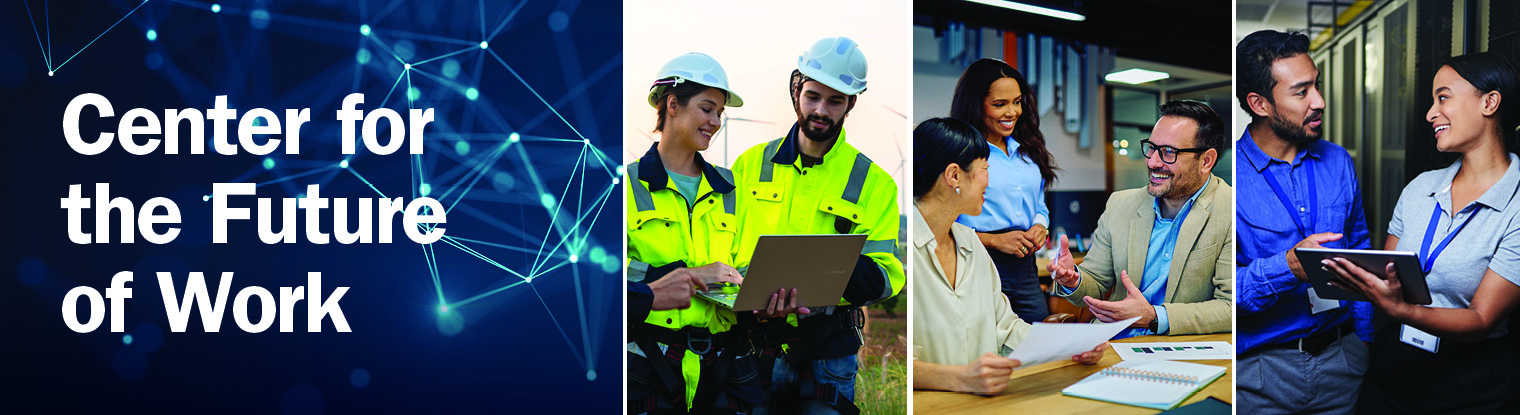
That's why we created the Center for the Future of Work at Tri-C.
The center serves as a hub for future-facing research and policy at Tri-C: it aggregates national and regional workforce data, identifies rising challenges facing students, workers, educators, and employers, and translates those findings into policy and practice recommendations for the College and the region.
The center keeps Tri-C and its partners ahead of workforce changes by monitoring, synthesizing and translating research into actionable insights. It also conducts and supports the applied, locally grounded research that national data cannot provide.
Strategic Objectives:
Tri-C leadership, faculty and partners are consistently equipped with current, actionable intelligence on workforce trends and their implications for both the College and the region.
The center is recognized as a credible contributor to applied, locally grounded knowledge on regional workforce conditions, social determinants of work and student outcomes.
The center operates within a network of internal and external research partners that expands its capacity to generate and disseminate knowledge beyond what a small team could produce alone.
Equity is embedded in the center's research agenda — the disproportionate impact of workforce disruption on at-risk populations is documented, named and connected to institutional response.
The center ensures that Tri-C learners — traditional and nontraditional students, workers, and faculty — have the skills, knowledge, and experiences needed to thrive in the evolving labor market. Faculty are the primary point of connection between the Center’s work and the students and workers it ultimately serves; supporting their capacity to teach future-of-work skills is the Center’s most direct lever for student impact.
Strategic Objectives:
Faculty are equipped and supported to integrate future-of-work skills — including AI literacy, digital fluency, and applied learning design — into their teaching and curriculum.
Tri-C learners have access to learning experiences that connect classroom instruction to the real demands of an evolving labor market, including work-based, experiential, and applied learning opportunities.
The broader Tri-C community — administrators, staff, and institutional leadership — understands the urgency of future-of-work skill demands and is engaged in the institutional response.
Flexible, stackable learning options are available for students, workers and career changers who need to build new skills or transition to growing fields.
The center's community and economic impact is realized through its other pillars. When research informs institutional decisions, when faculty bring updated skills and knowledge into the classroom, and when policy advocacy creates more equitable conditions for workers and learners, the result is graduates who are better prepared to secure meaningful, well-paying work in the regional economy. The center's role is to ensure that Tri-C remains connected to the regional context its graduates are entering.
Strategic Objectives:
Tri-C graduates are better prepared to secure work in the regional economy as a result of center-supported programs, research and partnerships.
Underrepresented learners have equitable access to the skills, networks and opportunities that connect them to quality employment in growing regional sectors.
The center is established as a trusted regional convener — a platform where employers, educators, policymakers and community members engage on future-of-work issues and build the relationships that translate into opportunity for Tri-C students and workers.
The center's research, programming and convenings strengthen Tri-C's existing regional relationships by contributing insight and intelligence that those partnerships can act on — without duplicating or displacing the College's established employer and community engagement functions.
The center advances Tri-C's role as a policy-informed institution, where decisions about AI, workforce preparation and student opportunity are grounded in evidence. In addition, Tri-C contributes to the regional and statewide conversations that shape the conditions its students navigate. That contribution begins internally, where the center serves as a resource for leadership navigating future-facing strategy and extends outward as its credibility and research capacity grow.
Strategic Objectives:
Tri-C leadership has access to timely, evidence-based guidance on internal policy questions related to AI use, work-based learning, credit/noncredit alignment, lifelong learning and the social determinants of work.
Policy recommendations developed or supported by the center are grounded in the lived experiences of students and workers, not only institutional or employer perspectives.
The center is positioned as a credible contributor to regional and statewide policy conversations on workforce and education — a voice that carries institutional standing and research-informed authority.
Tri-C's policy decisions reflect an understanding of how AI, automation and changing work arrangements are affecting the populations the College serves.
Faculty Externships
These experiences enhance program visibility, cultivate important relationships, and help to develop a dynamic hiring environment for Tri-C students.
Benefits for employer partners:
Generating creative ideas for pressing challenges
Building relationships with key Tri-C thought leaders
Sharing industry trends with those teaching regional community college students
Broadening their organization's network and exposure to academic pathways that align with industry needs
Producing tangible outcomes and applying faculty expertise to current business needs
Benefits for faculty:
Fostering relationships between Tri-C faculty and area employers to generate collaborative opportunities for shaping the regional workforce
Conducting in-depth research in their fields
Developing or expanding their curricula
Enhancing pedagogical approaches to provide students with up-to-date skills and knowledge
Expanding professional networks
Learning more about current issues facing the industry and our community
Earning a stipend
Tri-C Faculty Design Team:
David Bernatowicz, Associate Professor, History
Matthew Crowley, Assistant Professor, Information Technology
Michael Flatt, Ph.D., Associate Professor, Sociology
Michele Hampton, Ph.D., Professor, Business Administration, Economics
Rachel Stehle, Ph.D., Associate Professor, Sociology
Lemuel Stewart III, Ph.D., Associate Professor, Counseling
Marty Walsh, Assistant Professor, Information Technology
College Partners at the Center for the Future of Work