
Future of Work Conference
Tuesday, Oct. 6 | 8 a.m. – 1 p.m.
Corporate College® East, Room 126
4400 Richmond Road | Warrensville Heights, Ohio 44128
39% of workers' skills will change by 2030*
Northeast Ohio can't wait for the future of work to happen. Come ready to engage with the Center for the Future of Work at Tri-C's inaugural Future of Work Conference — a landmark half-day event on Oct. 6.
About the Speakers
Hear from three nationally recognized voices shaping the future of work. Together, they bring the data, policy and practice perspectives that matter most.
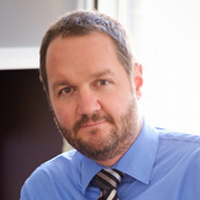 Paul Fain
Journalist and Co-Founder, Work Shift
Paul Fain, a veteran higher education reporter, is one of the nation's top journalists focused on the connection between education and work. Fain is co-founder of Work Shift, editor of the must-read newsletter The Job and host of The Cusp podcast. Previously, Fain was a senior reporter and news editor at Inside Higher Ed, where he oversaw coverage of low-income and first-generation students, college completion, community colleges, federal policy and emerging models of higher education. Earlier in his career, Fain was a senior reporter at The Chronicle of Higher Education.
 Lisa McIntyre-Hite, Ph.D.
EVP and COO, Competency-Based Education Network (C-BEN)
Lisa McIntyre-Hite has over 21 years of experience spanning leadership roles across K-12, higher education, educational technology, product development, workforce education and strategy consulting. She is an expert in designing and launching competency-based solutions across K-12, higher education, non-traditional learning providers and workforce in order to meet the needs of all learners while addressing the most pressing talent shortages. Prior to joining C-BEN, McIntyre-Hite was vice president of Learning Innovation at Guild, senior advisor at Entangled Solutions and vice president of Partner Strategy and Innovation at Pathstream.
 Yustina Saleh, Ph.D.
Vice President, Innovation, Burning Glass Institute
Yustina Saleh is Vice President of Innovation at the Burning Glass Institute, where she leads the design and development of cutting-edge solutions to enhance visibility and practicality of real-time labor market data. With over 20 years of experience connecting people with careers, she is a pioneer in skills-based hiring and workforce innovation. Saleh formerly served as executive vice president of Research and Analytics at Emsi; director of The Analytics Center of Excellence at Rutgers; director of Real-Time Labor Analytics at Burning Glass Technologies; and director of Labor Market and Demographic Research for the state of New Jersey.
Executive Roundtable
Work in Progress: A Conversation on Employment and Opportunity
A candid discussion about the changing workforce, employer needs, and how education and industry can work together to build stronger talent pipelines.
Moderator
Sharon Sobol Jordan, President & CEO, United Way of Greater Cleveland
Featured Speakers
- Christine Alexander-Rager, MD, President & CEO, MetroHealth
- Neal Restivo, CEO, Oatey Company
- Hannah Delis, Chief Human Resources Officer, Swagelok
- Sriram Mangudi, Morningside Group | Principal, Human Capital Solutions
Breakout Sessions
Track A: AI in Higher Education and the Workforce
Artificial intelligence is transforming every industry and changing the skills employers need. Join AI experts and Tri-C faculty for a discussion on how higher education can prepare students for an AI-enabled workforce and meet evolving labor market demands.
Facilitator: Tristan Douglas, Program Specialist, Center for the Future of Work, Cuyahoga Community College (Tri-C®)
Panelists:
- Rocco Cuffari, AI Transformation Architect
- Al Cowger, Attorney and Lecturer, AI Law
- Craig Platt, President, BDPA Cleveland
- Vicky Bonillas, Assistant Professor of English, Cuyahoga Community College (Tri-C®)
Track B: Bridging the World of Work and the Classroom: Faculty Externships
Discover how Tri-C's Faculty Externship program connects faculty with employers to align academic programs with workforce needs. Faculty and employer partners will share insights, best practices and the program's impact on students, curricula and industry.
Facilitator: Jessica V. Colombi, Executive Director, Economic Development and Public Policy, Cuyahoga Community College (Tri-C®)
Panelists:
- Kolleen Barnes, Associate Professor of Captioning and Court Reporting, Cuyahoga Community College (Tri-C®)
- Kelly Moranz, Assistant Professor of Captioning and Court Reporting, Cuyahoga Community College (Tri-C®)
- Gregory Kennedy, Director of Human Resources and Personnel, Cleveland Municipal Court
- Margie MacDonald, Ph.D., Assistant Professor of Biology, Cuyahoga Community College (Tri-C®)
- Michael Flatt, Associate Professor of Sociology, Cuyahoga Community College (Tri-C®)
- Rachel Stehle, Associate Professor of Sociology, Cuyahoga Community College (Tri-C®)
- Khaz Finley, Assistant Vice President of External Engagement, Federal Reserve Bank of Cleveland
Track C: Work Won't Work Without Them: Addressing Hidden Drivers of Employment
Employment outcomes are shaped by more than technical skills. Learn how childcare, transportation, housing and other social factors affect workforce participation and explore collaborative strategies that help remove barriers to employment.
Facilitator: Eric Gordon, CEO, Positive Education Program
Panelists:
- Jack Schron, President, Jergens, Inc
- Maryam Kiefer, Senior Director of Public Policy, United Way of Greater Cleveland
- Lauren Rudman, SHRM-SCP, SPHR, Senior Director, Human Resources & Training, GNCO Inc.
- Wendy Batch-Wilson, DNP, RN, Dean, School of Nursing, Cuyahoga Community College (Tri-C®)
Thank You to Our Sponsors