
Suicide Survivor Kevin Hines Brings Message of Hope to Tri-C
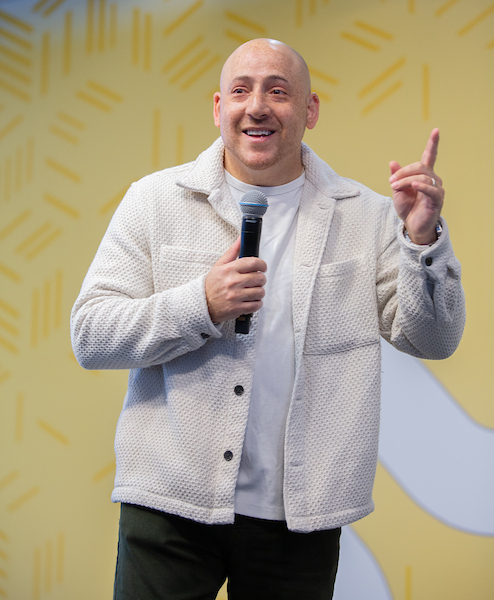 CLEVELAND — When Kevin Hines was 19, his "brain broke." Suffering from hallucinations, depression and panic attacks, he was staring down a dark abyss of pain, from which he saw no escape.
The voices were persistent and sinister, and, like so many people who don't know how or are afraid to get help, he listened to them. So, on Sept. 25, 2000, he walked out onto the Golden Gate Bridge, climbed over the railing and stared at the water below. Then he jumped.
The instant Hines's feet left the bridge, he regretted what he had done, he recently told an audience at the Alex B. Johnson Center of the Cuyahoga Community College (Tri-C®) Metropolitan Campus. It takes about four seconds to fall from the bridge to the icy water. He used that time to pray that his life be spared.
It was. Thanks to a nearly miraculous series of events that included a sea lion keeping him afloat, Hines survived. He has three titanium vertebrae today and lots of physical pain
"I am grateful to be here," Hines, 44, said. "I am grateful to be anywhere."
His mission since that day has been mental health advocacy and suicide prevention. He helped in the successful effort to install suicide barriers on the Golden Gate Bridge, once the most used suicide site in the world. Using public speaking, social media and film, his message is simple: There is always hope, and anyone can provide it.
"One person who passes on this way is one too many," Hines said.
College-age people are particularly vulnerable. According to the webpage of Help Is Here, a Tri-C mental health support department, "At some point during life, about 50% of the world's population will experience a mental health diagnosis. Suicide is the second leading cause of death among 10 to 34 year olds."
Mental health challenges can lead to isolation, and human connection is the antidote, Hines said. It can be hard to reach out and harder to open up — but this simple, if not always easy, act can save lives.
"Your brain is an organ just like any other organ in your body, and it can become diseased," he said.
Help Is Here sponsored Hines's visit to Tri-C, which included talks at all four College campuses.
"Never again silence your pain," he said. "Your pain is valid. Your pain matters. Tell the truth about your pain."
Hines said that, as he made his way to the Golden Gate Bridge, he had wished desperately that someone would have asked him if he was OK.
"People don't need you to solve their crises. They need to be heard," he said. "Spend some time with them. Listen to them."
And if you need help, have the courage to ask for it.
Resources:
May 04, 2026
Media Contact: Jarrod Zickefoose, 216-987-4750 jarrrod.zickefoose@tri-c.edu