
Starting at Tri-C is a Smart Play for College Athletes
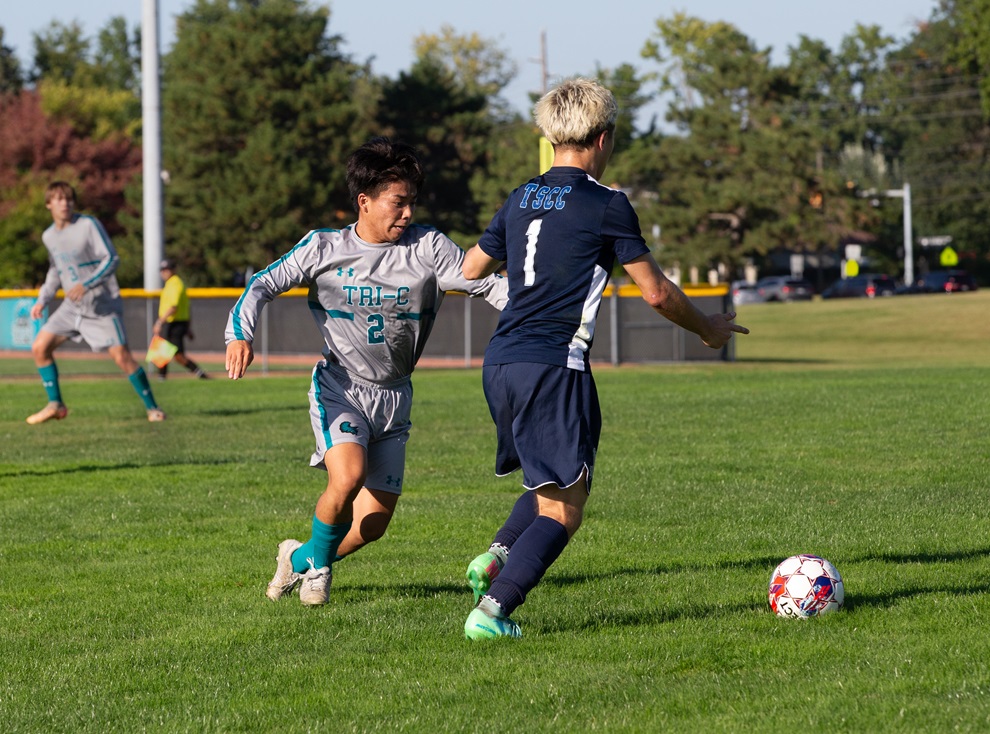
For high school athletes, the best path to a National Collegiate Athletic Association (NCAA) school may now run through a junior college.
Increasingly, four-year colleges are scouting two-year schools for recruits because the athletes are acclimated to the academic rigors of college, have logged collegiate-level field time, and have learned to balance classes, practice and travel.
Junior college — or JUCO — athletes are often better prepared for the academic and athletic demands of an NCAA school and, as such, are highly desirable to four-year recruiters. JUCO programs also produce student-athletes better positioned to score scholarships at four-year schools.
It’s a win-win for both JUCOs like Cuyahoga Community College (Tri-C®) and NCAA schools.
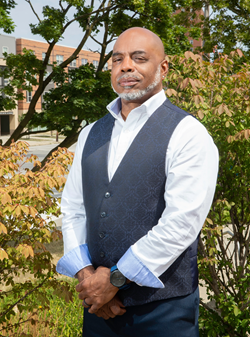
“It’s a very, very good space for us to be in,” Anthony Franklin, executive director of Athletics, Wellness and Recreation at Tri-C, said. “At the highest level, the four-year schools are not about development anymore. The development is at the JUCO level.”
Opening the Door
The trend in JUCO recruitment started after Covid, when eligibility waivers opened the pool of two-year college athletes to NCAA schools. These athletes already had a couple of years of college-level experience and, critically, were now eligible to play at a four-year school.
Though it faces legal challenges, the eligibility transfer rule remains intact.
JUCOs themselves had been waiting for this moment. The yearslong burnishing of their academic and athletic reputations had resulted in a visible glow that four-year schools couldn’t ignore.
“JUCOs used to have a stigma that the athletes didn’t have the academic chops,” Franklin said. “That covered the JUCO landscape for half a century.”
It’s a different story today.
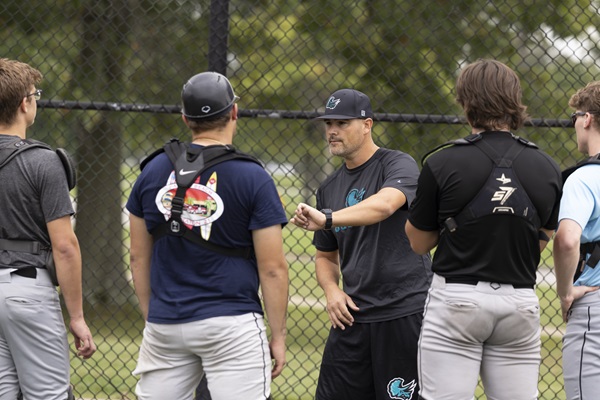
“In the last five or 10 years, the credibility of junior colleges has increased dramatically,” said Kyle Stahlberg, who led the Triceratops baseball team to an Ohio Community College Athletic Conference (OCCAC) championship last season with a 44-8 record that included an epic 41-game win streak.
“For places like Tri-C, the academics are very, very good. The support is very, very good. The facilities are amazing, and the baseball program now has a good track record for proving that it’s a great place to develop. It’s a viable academic and athletic option.”
According to the website Keep Playing Baseball, 80 JUCOs had 20 or more alumni playing on four-year college baseball teams in 2017. By 2023, that number had jumped to 207 two-year schools.
Athlete Development
Stahlberg took over as head coach of the Triceratops baseball team in 2022, following three dormant seasons due to Covid. He won the OCCAC’s Coach of the Year award twice and recently took a position with the Miami Marlins organization to coach in their minor league unit.
During his time leading the Tri-C program, 19 baseball players have transferred to DI, DII, DIII or NAIA schools.
“At Tri-C, what we’re trying to do is identify the guys who are hungry for it, the ones who want it real bad, and they’re just not quite there yet,” Stahlberg said.
During the 2024-2025 academic year, NCAA roster limits for DI baseball teams shrunk from 40 to 34 — so while the effect is still playing out, the few spots that might have been available to develop players aren’t there anymore.
“The number one thing is development, so we make sure we are giving them the structure, support and opportunity to develop as much as they possibly can, and that makes them an attractive option for a Division I or Division II program,” Stahlberg said.
“Development takes several forms. Yes, you’re here to participate on the baseball team, but No. 1, you’re here to get a degree, so we want to make sure that they have the environment, structure and support to excel in the classroom.”
JUCOs save NCAA DI, DII, and DIII schools time and money on recruiting, fill roster gaps and introduce developed players who can make an immediate impact.
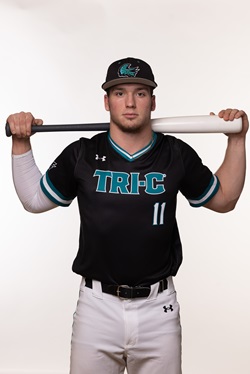
In 2024, Triceratops outfielder Kyle Koehler was an NJCAA Division II First Team All-American. He transferred from Tri-C to Florida International University, an NCAA DI school. In his first season there, he played nine games, starting in two. Tri-C’s basketball program has also sent players directly to DI schools.
However, for some players, the goal is not necessarily DI competition. It’s using their athletic prowess to pay for college.
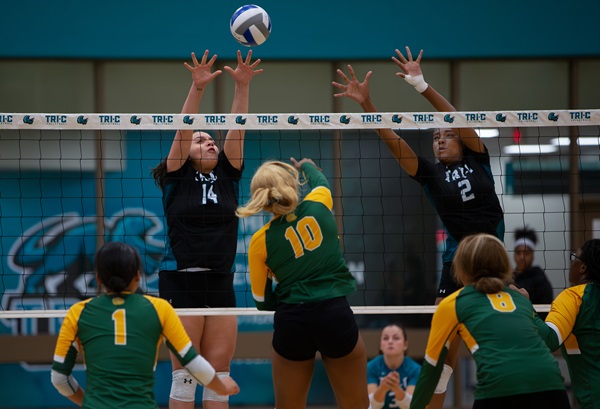
Pick and Roll
Softball player Tia Rizzo attended DII Notre Dame College of Ohio on an athletic scholarship after competing and studying at Tri-C from 2017-2019. She earned her associate degree from Tri-C and, in 2022, her bachelor’s in psychology at Notre Dame.
“I was really happy I went to Tri-C first,” Rizzo said. “It got me used to college and college sports, and I saved so much money. If I went to a four-year off the bat, I probably would be in debt, but I have no debt.”
She started her college journey at Tri-C with an athletic scholarship and said her time at the College was instrumental in earning her scholarship to Notre Dame. She doubted she would have received any scholarship money had she gone right to a four-year from high school.
Rizzo, who graduated from Oak Hills High School in Cincinnati, added that attending Tri-C allowed her to explore different fields of study without feeling like dollar bills were flying out the window.
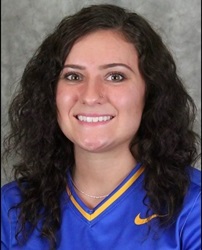
“I got my four-year degree, and I probably paid less than half of what most people do who go to a four-year school right from high school,” she said.
And it’s not as if she sacrificed anything on the softball diamond.
“Tri-C has a very good softball program, and my experience playing there was very similar to my experience at Notre Dame. We played some tough competition at Tri-C. We went to the national tournament. We were playing girls who probably went DI. There are great athletes who play at the JUCO level.”
Tri-C’s position as a leading two-year institution means it gets a lot of looks from NCAA recruiters, and because of that, the College can draw high school athletes like Rizzo from farther afield than Northeast Ohio.
The Yellow Brick Road
For most high school athletes, developing at Tri-C is a sensible way to increase their chances of competitive success on the field and in the classroom at an NCAA school.
Franklin said, “The yellow brick road now runs through Tri-C.”
September 23, 2026
Jarrod Zickefoose, 216-987-4750 or jarrod.zickefoose@tri-c.edu